Every premium and members-only resource for $9.99/month, as a no-commitment subscription. See the plans

PalateKit

Menu

Request a resource

Describe the resource you are missing in one sentence. We will email you when it is published.

0 / 280

Unlock PalateKit

Unlock everything

Plan

Paying means accepting our terms of sale.

Secure payment by Stripe. Receipts and invoices sent by email.

Welcome back

Sign in to install, download or save this resource. A free account is enough for free resources.

Three-step cursor path with trail and numbered markers v1.0.0

Use this resource to guide the eye along a click path in a tutorial

New

  • 412 downloads
  • 181 likes
  • 200 saves

Free

Install with the CLI

In a terminal, from the folder you want:

npx --yes palatekit@latest install tutorial-cursor-path-steps

First time: connect the CLI with

npx --yes palatekit@latest login

The agent adds to your HyperFrames composition a settings screen where the cursor goes through three steps. Each move leaves an evenly spaced trail that fades when the next move starts. You set the density, the path, the fade time and the accent.

Mostly picked by

Updated November 2, 2026

Details

Generates with
HyperFrames
Uses
  • HyperFrames (npx hyperframes)
  • Node.js
Licence
Apache-2.0

Similar resources

View all

What you get

  • README.md: usage guide
  • cursor-glyph-trail.html: the author's original file
  • demo.html: the author's original file
  • README.md: the author's original file
  • registry-item.json: the author's original file

Good fit for

  • Explain a three-step setup
  • Make a configuration tutorial
  • Show the path to follow in an interface

Not for

  • A classic video edit without HyperFrames or Node.js
  • An animation that must run as is on a web page

Tags

  • cursor
  • tutorial
  • steps
  • trail
  • interface

About

You say

"Show three numbered clicks on a settings screen: turn on the digest, pick Weekly, save."
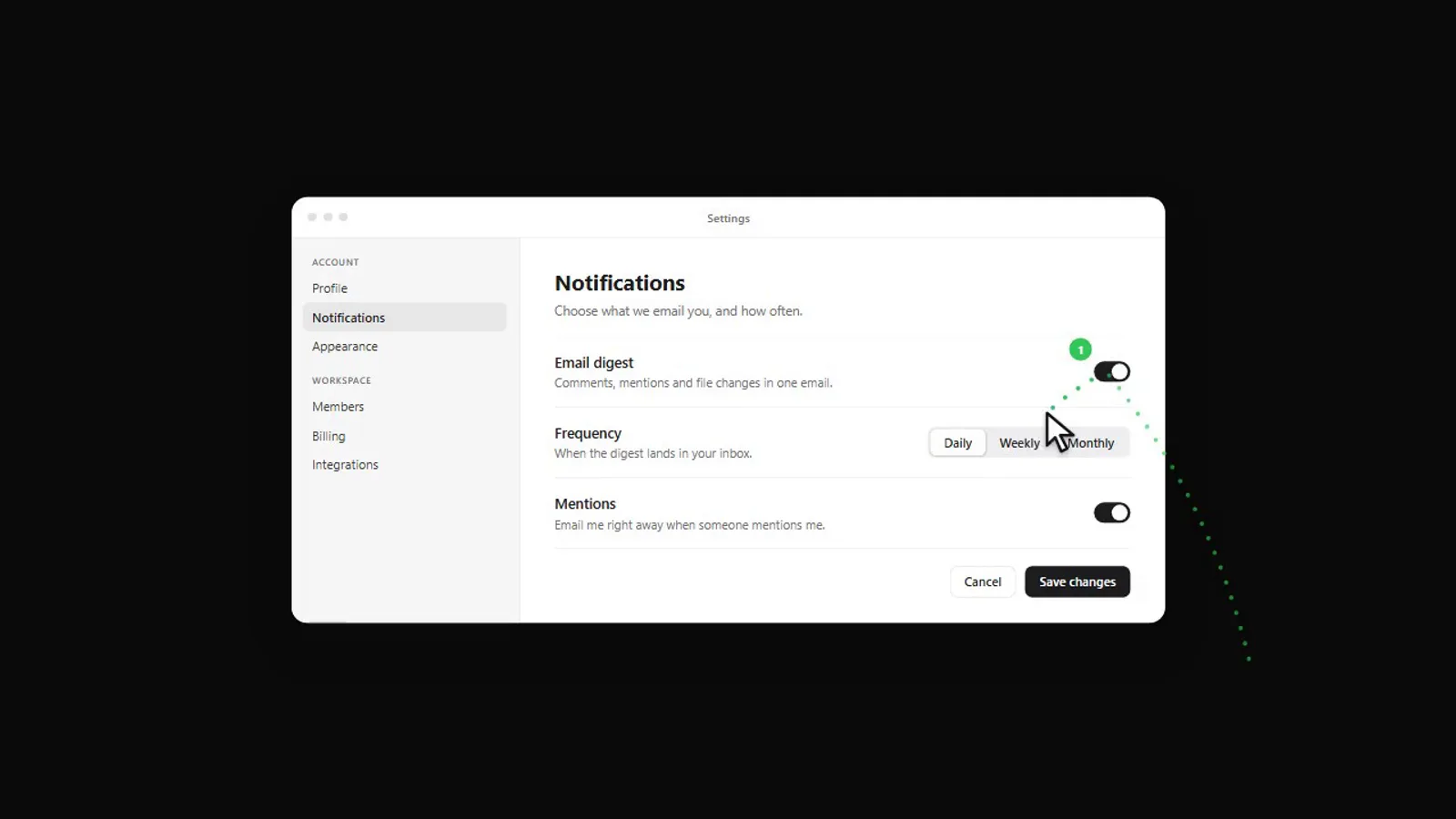
A cursor leaving a dotted trail and numbered markers on a settings screen.

Composition published by HeyGen (HyperFrames) under the Apache-2.0 license, resource page and guide written by PalateKit.

Show more

Prerequisites

You bring
Your texts and colors and A HyperFrames project (or the agent creates one)
Dependencies
HyperFrames (npx hyperframes) and Node.js

How to use it

  1. Install it in your HyperFrames project with npx hyperframes add cursor-glyph-trail, or copy the provided files.
  2. Ask the agent to change the texts, colors and duration in the HTML file.
  3. Run the HyperFrames preview, then the render, to get the video.

Content preview

Files

  • cursor-glyph-trail.html24.2 KB
  • demo.html2.2 KB
  • LICENSE10.5 KB
  • NOTICE-PALATEKIT.md0.4 KB
  • README.md0.8 KB
  • registry-item.json3 KB

Origin and licence

Modified by PalateKit

Author
HeyGen (HyperFrames)
Source
github.com/heygen-com/hyperframes/tree/2c3d1e07fe63d4a2d67d63a3e29d4ad73e291d8e/registry/components/cursor-glyph-trail
Licence
Apache-2.0

Notice

Version modifiée de « Cursor Glyph Trail » (HeyGen (HyperFrames), Apache-2.0) : traduction française et fiche par PalateKit.

User reviews

–

No ratings yet

Loading reviews…

Delete your review?

Your rating and comment will be removed from the page.

Frequently asked questions

Do I need HyperFrames?

Yes: the composition renders to video with HyperFrames (Node.js). The agent can install it and run the render.

Can I change the texts and colors?

Yes, they live in the HTML file. Give the agent your texts and palette.